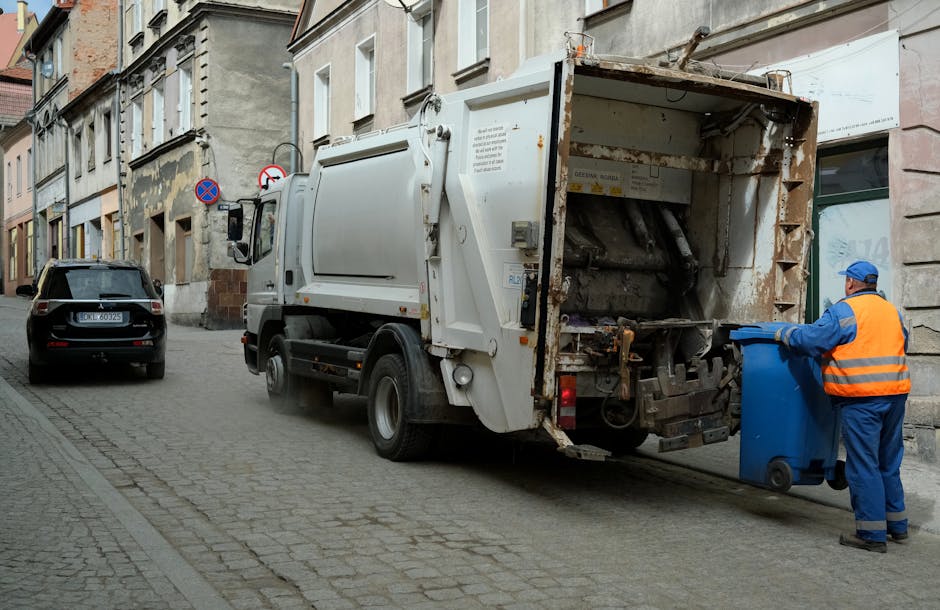
What to know about delays in rubbish removal near Walworth Road
If you are waiting on a rubbish removal booking near Walworth Road, delays can throw off the whole day. A missed collection is not just annoying; it can leave bags blocking a hallway, builders' waste piling up outside, or a flat feeling cramped and chaotic. Truth be told, most delays are avoidable once you understand what causes them and how to plan around them.
This guide explains what to know about delays in rubbish removal near Walworth Road, why they happen, how reliable collections usually work, and what you can do to keep things moving. It also covers local practicalities, pricing expectations, compliance basics, and a simple checklist you can use before your next collection.
Key takeaway: the best way to reduce delay risk is to book clearly, prepare access properly, and stay realistic about London traffic, loading restrictions, and the type of waste you have. That sounds obvious, but it saves a surprising amount of stress.
Why delays in rubbish removal near Walworth Road matter
Walworth Road sits in a busy part of South London, so collections can be affected by traffic, narrow access points, parked cars, school-run congestion, and the simple fact that everyone seems to need a van at once. If your rubbish removal runs late, the knock-on effect can be more than a slight inconvenience. A delayed clearance can disrupt movers, decorators, landlords, tenants, and small businesses trying to keep a site tidy.
For homes, the impact is usually practical: bags in the front room, broken furniture in the hall, or a garage you cannot use until the waste is gone. For businesses, delays can slow reopenings, create health and safety concerns, or leave customer-facing spaces looking untidy. And if you are dealing with renovation waste, a late collection can hold up the next trade coming in. Nobody loves a chain reaction on a Thursday afternoon.
Delays matter because waste tends to spread. One skipped collection becomes two, and then suddenly the job feels bigger, messier, and more expensive. That is why understanding the reasons behind delays is useful even if your collection has not been affected yet.
How rubbish removal timing and delays usually work
Most rubbish removal services work around an agreed collection window rather than an exact minute. That gives room for traffic, previous jobs, loading time, and access issues. In a dense area near Walworth Road, a van may need to navigate narrow streets, other parked vehicles, and the practical limits of where it can stop safely.
A typical process looks simple on paper:
- You describe the waste, access, and approximate volume.
- The collection is priced or quoted based on the information provided.
- A time slot or collection window is arranged.
- The team arrives, assesses the load, and removes the items.
- The waste is sorted for reuse, recycling, or disposal where suitable.
Delays often happen when one of those steps is unclear. For example, if the team expects a ground-floor flat but finds a top-floor walk-up with no lift, the job may take longer. If the waste is described as "a few bags" but turns out to include a sofa, broken wardrobes, and mixed builders' debris, the schedule can slip. It is not always anyone's fault. Sometimes the details just do not match the reality on the day.
In our experience, the biggest source of frustration is not the delay itself. It is the silence around it. A decent provider will usually explain what is happening, whether they are running late, and what has changed in the plan. That communication is half the battle.
Key benefits of planning ahead
Good planning will not remove every delay, but it reduces the chances of a messy day. More importantly, it helps you choose the right service for the job. If you know what to expect, you can compare quotes with a clearer head and avoid booking the wrong type of clearance entirely.
- Less downtime: your home, flat, office, or site becomes usable sooner.
- Lower stress: you are not waiting around wondering when the van will show up.
- Better cost control: fewer surprises usually means fewer extra charges.
- Safer spaces: waste is removed before it becomes a trip hazard or access problem.
- Cleaner communication: it is easier to confirm what is included and what is not.
There is also a sustainability angle. Well-planned collections make it easier for waste to be separated properly, which is especially useful when dealing with furniture, mixed household rubbish, or renovation debris. If environmental handling matters to you, take a look at the company's recycling and sustainability approach before booking. It is a small detail, but it tells you a lot about how the job will be handled.
And yes, planning ahead can even improve the mood of the day. A removal slot that fits neatly into your schedule feels very different from one that drifts into the afternoon and eats the whole evening. You notice it. Your neighbours probably do too.
Who this is for and when it makes sense
Delays in rubbish removal near Walworth Road affect more than one type of customer. The needs are different, but the pain point is the same: waste is in the way and time is tight.
Homeowners and tenants
If you are clearing out after a move, decluttering a flat, or replacing furniture, a delay can leave your home feeling half-finished. That matters most when you are juggling keys, cleaners, or a checkout deadline.
Landlords and letting agents
For property professionals, a delayed removal can hold up re-letting, repairs, or photos. A flat that is technically empty but visually cluttered is not really ready.
Tradespeople and renovators
Builders' waste has a habit of multiplying. If rubble, timber, or packaging is not picked up on time, it can block the next phase of work. This is where a specialist like builders' waste clearance becomes especially useful.
Offices and local businesses
Old desks, packaging, archive boxes, or broken furniture can take up valuable space. A delay in removal may affect staff movement, customer presentation, or health and safety. In those cases, office clearance or business waste removal is often the better fit.
People with larger mixed clearances
Sometimes the issue is not one sack of rubbish. It is a garage, loft, garden, or full room clear-out. The bigger and more varied the job, the more likely timing issues become if access or volume is not discussed properly. A few relevant services may help you judge the scope, such as loft clearance, garage clearance, or garden clearance.
Step-by-step guidance
If you want to avoid delays, the booking process needs to be a bit more precise than "there is some stuff to collect." A clear brief helps the provider schedule the right vehicle, the right team, and enough time on site.
- List the waste clearly. Separate general rubbish, furniture, garden waste, builders' debris, and anything that may need special handling.
- Estimate the volume honestly. A bag, a box, and a broken wardrobe are not interchangeable. If in doubt, describe the items rather than guessing in cubic metres.
- Check access. Note stairs, lift availability, parking restrictions, gated entries, or narrow hallways. Those details matter more than people think.
- Choose the right service type. A single-item pickup is different from a full house clearance. If you need a broader clean-out, house clearance or home clearance may be a better match.
- Confirm the time window. Ask whether the slot is an exact appointment or a collection window. If your day is tight, make that clear early.
- Prepare the waste in advance. Put it in one place if possible. Don't make the crew hunt around the property like they are on a treasure map.
- Keep your phone on. If traffic, parking, or a previous job causes a delay, communication helps everyone adjust quickly.
- Review the final scope on arrival. This is the last chance to flag extra items before the crew starts loading.
If you are dealing with specific items, it may also help to review related pages like furniture clearance or furniture disposal. That can make the conversation easier and reduce the chance of misunderstanding.
Expert tips for better results
Here is the part people often skip, and then wonder why things went sideways. These are small habits, but they make a real difference.
- Book with a buffer. If you have an urgent deadline, do not schedule the removal right on the edge of it. Leave breathing room.
- Take quick photos. A few phone pictures can be more accurate than a long description. They also reduce back-and-forth.
- Be specific about awkward items. Mattresses, fridges, mixed rubble, plasterboard, large wardrobes, and broken mirrors all affect handling time.
- Ask about loading constraints. If waste has to be carried down several flights, say so early. It affects labour and timing.
- Keep access clear on the day. A parked bike, a locked gate, or a child's buggy in the hallway can slow the team down more than you'd expect.
- Use the right service for the property type. A flat clearance is different from an office job, even if the volume looks similar on the surface.
A small but useful habit: build in five extra minutes for every five minutes you think the job will take. That is not a formal formula, just a very London sort of rule of thumb. It keeps expectations grounded.
Expert summary: the smoothest rubbish removals are rarely the ones with the fanciest booking page. They are the ones where the customer gives clear access details, realistic item lists, and a sensible time window. Simple, but powerful.
Common mistakes to avoid
The same mistakes come up again and again, and they are usually easy to fix next time. Some are minor. Others can turn a straightforward collection into a frustrating delay.
- Underestimating the amount of waste. "Just a few bags" sometimes turns out to be a full van load.
- Not mentioning stairs or access barriers. This is one of the biggest causes of running late.
- Booking too tightly around other appointments. One delay can wreck the rest of your day.
- Mixing everything together. If items need different handling, the team needs to know.
- Leaving items scattered everywhere. That makes loading slower and more awkward.
- Ignoring parking realities. If a van cannot stop safely, the whole process becomes harder.
- Assuming every company handles the same kinds of waste. They do not.
One of the sneakiest mistakes is failing to ask what happens if the team is delayed. It feels like a boring question until the day it matters. Then it is suddenly very interesting. Ask anyway.
Tools, resources and recommendations
You do not need special software to manage rubbish removal delays, but a few simple tools make life easier.
- Phone photos: best for showing volume, item type, and access issues.
- Notes app or checklist: useful for listing every item, especially during a clear-out.
- Calendar reminders: set one for the collection window and another for an hour before.
- Measurement rough guide: use a tape measure if you are unsure whether furniture will fit through a doorway.
- Building access notes: if a concierge, key safe, or buzzer is involved, write the details down.
For readers comparing service options, these site pages can help frame the discussion: pricing and quotes for cost expectations, payment and security for transaction confidence, and insurance and safety for reassurance about how the work is carried out.
If your issue is a broader property clear-out rather than a single pickup, browsing the flat clearance or garage clearance pages can also help you understand what type of job you are actually booking. That sounds obvious, but it is often where confusion begins.
Law, compliance, standards and best practice
Waste removal is not just a convenience service. It also sits within a practical framework of duty of care, safe handling, and responsible disposal. You do not need to become a legal expert to book a collection, but it does help to understand the basics.
In the UK, households and businesses should be cautious about how waste is transferred, stored, and disposed of. The exact obligations can differ depending on the waste type and whether the job is domestic or commercial. For example, mixed builders' waste, office materials, and old furniture may all need different handling. The safest approach is to use a provider that can explain what will happen to the waste, and whether anything cannot be taken.
Best practice usually includes:
- clear item descriptions before booking
- safe lifting and loading on site
- appropriate segregation of recyclable materials where possible
- careful handling of items that may contain sharp edges, dust, or broken glass
- transparent terms about what is included in the collection
If your rubbish includes potentially hazardous materials, stop and check before putting anything out for collection. Do not assume it can go with ordinary household rubbish. If a provider mentions health and safety controls, that is a good sign they take the work seriously. You can review the company's health and safety policy and complaints procedure if you want more clarity on standards and customer support.
For businesses, delays can also affect compliance with housekeeping standards, site tidiness, and general workplace safety. It is not dramatic, but it is real. A cluttered back office or loading area can create unnecessary risk.
Options, methods, or comparison table
Not every rubbish problem needs the same solution. The right approach depends on volume, urgency, access, and the type of items you are moving.
| Option | Best for | Typical delay risk | Notes |
|---|---|---|---|
| Single-item collection | One or two bulky items | Low to moderate | Fast if access is easy and the item is clearly described. |
| General rubbish removal | Mixed household waste or bagged rubbish | Moderate | Delays rise if volume is underestimated or access is tight. |
| Furniture clearance | Sofas, beds, wardrobes, tables | Moderate | Often needs more handling time and better access planning. |
| House or home clearance | Room-by-room or full-property jobs | Higher | Better suited to clear scheduling and a more detailed brief. |
| Builders' waste clearance | Renovation debris, rubble, offcuts | Higher | Heavier materials and site constraints can slow things down. |
If you are torn between a quick pickup and a fuller service, ask yourself one simple question: would I be annoyed if the team arrived and discovered more than expected? If the answer is yes, you probably need the bigger service from the start.
Case study or real-world example
A local resident near Walworth Road had finished a flat refurbishment and needed mixed waste removed before a cleaner arrived the next morning. The waste looked manageable at first glance: a couple of broken shelves, paint tins, packaging, and some old furniture. But when everything was gathered in one place, it turned out to be more than expected, and the hallway was narrower than the customer had remembered.
The collection was still completed, but the extra time went into careful carrying, manoeuvring around a shared entrance, and sorting items into the right loads. The lesson was simple: the delay did not come from the waste alone. It came from the combination of access, volume, and a rushed booking brief. A few photos sent ahead of time would have made the whole thing easier.
Another small but familiar scenario: a shop owner on a Friday afternoon wants old stock and packaging gone before Monday trading. The collection is booked, but the van cannot stop easily because of parking pressure and loading restrictions. Suddenly, a "quick job" becomes a time-sensitive puzzle. It happens. More often than people like to admit.
Practical checklist
Use this before your collection, especially if you are worried about delays.
- Have I listed every item that needs removing?
- Have I mentioned stairs, lifts, gates, or parking limits?
- Have I confirmed whether the slot is exact or a collection window?
- Have I taken photos of the waste and access point?
- Have I separated anything unusual or potentially restricted?
- Have I left a clear route to the items?
- Have I made sure someone can answer the phone on the day?
- Have I checked whether I need a broader service like house clearance or office clearance?
- Have I read the pricing, payment, and safety information?
- Have I allowed a time buffer in case of London traffic or loading delays?
If you can tick most of those boxes, you are already ahead of the game. And if you cannot, no panic. Just fix the missing bits before the van is due.
Conclusion
Delays in rubbish removal near Walworth Road are usually caused by practical issues rather than anything mysterious: traffic, access, inaccurate descriptions, and over-tight scheduling. Once you know that, you can plan much more confidently. The real win is not just avoiding delays; it is choosing the right service, setting sensible expectations, and making the collection day feel calm instead of frantic.
Whether you are clearing a flat, dealing with office clutter, moving out furniture, or getting builders' waste off site, the same rule applies: clear information in, smoother collection out. That is the part people remember after the dust has settled, quite literally.
If you want to make the process simpler, compare your options carefully and choose a service that matches the job rather than forcing the job to fit the service. Small difference, big effect. One less headache, one cleaner space, and a much better start to whatever comes next.
Get a free quote today and see how much you can save.
Frequently Asked Questions
Why do rubbish removal delays happen near Walworth Road?
Delays usually come down to traffic, parking, access problems, or the waste being larger or more complex than first described. In busy London streets, even a short hold-up can ripple through the rest of the schedule.
How can I reduce the chance of a delayed collection?
Give a detailed description of the waste, share photos if possible, explain access issues, and leave the items in one easy-to-reach place. A little preparation goes a long way.
Is a collection window normal for rubbish removal?
Yes, collection windows are common because they allow for traffic, loading time, and earlier jobs running slightly over. If you need a very precise time, ask about that before booking.
What should I do if the team is running late?
Stay reachable by phone, ask for an updated arrival estimate, and check whether anything has changed with access or parking. Communication usually solves more than people expect.
Will delays cost more money?
Not always. It depends on the provider, the reason for the delay, and whether extra labour or extra time is required. It is worth asking how timing issues are handled before the collection day.
Do furniture collections take longer than general rubbish removal?
They often can, especially if items are bulky, need carrying down stairs, or must be manoeuvred through tight hallways. That is one reason furniture clearance should be described carefully in advance.
What if I have builders' waste as well as household rubbish?
Say so upfront. Builders' waste can change the vehicle, loading time, and disposal method. Mixed jobs need clearer planning than a standard household pickup.
Can I book a same-day collection near Walworth Road?
Sometimes, yes, but same-day booking can be more vulnerable to delays because the schedule is tight. If timing matters, ask early and be flexible where possible.
What information helps a waste removal team give a better estimate?
Item type, approximate volume, number of floors, parking situation, lift access, and whether anything is especially heavy or awkward. Photos help too. They cut out a lot of guesswork.
Is it better to choose a full clearance or a smaller pickup?
If you are unsure, lean toward the option that fits the true volume of waste. Underbooking is a common cause of delay. A more suitable service often ends up being smoother and less stressful.
Should I be worried about compliance or safety when booking rubbish removal?
You should at least check that the provider takes safety and waste handling seriously. For households and businesses, responsible handling matters. Reviewing the company's health and safety and recycling information is a sensible step.
What is the best way to prepare for a delayed rubbish removal slot?
Keep access clear, keep your phone nearby, and avoid stacking other appointments too tightly around the collection. A small buffer protects your day from turning into a scramble.